How to Calculate Income Tax in India
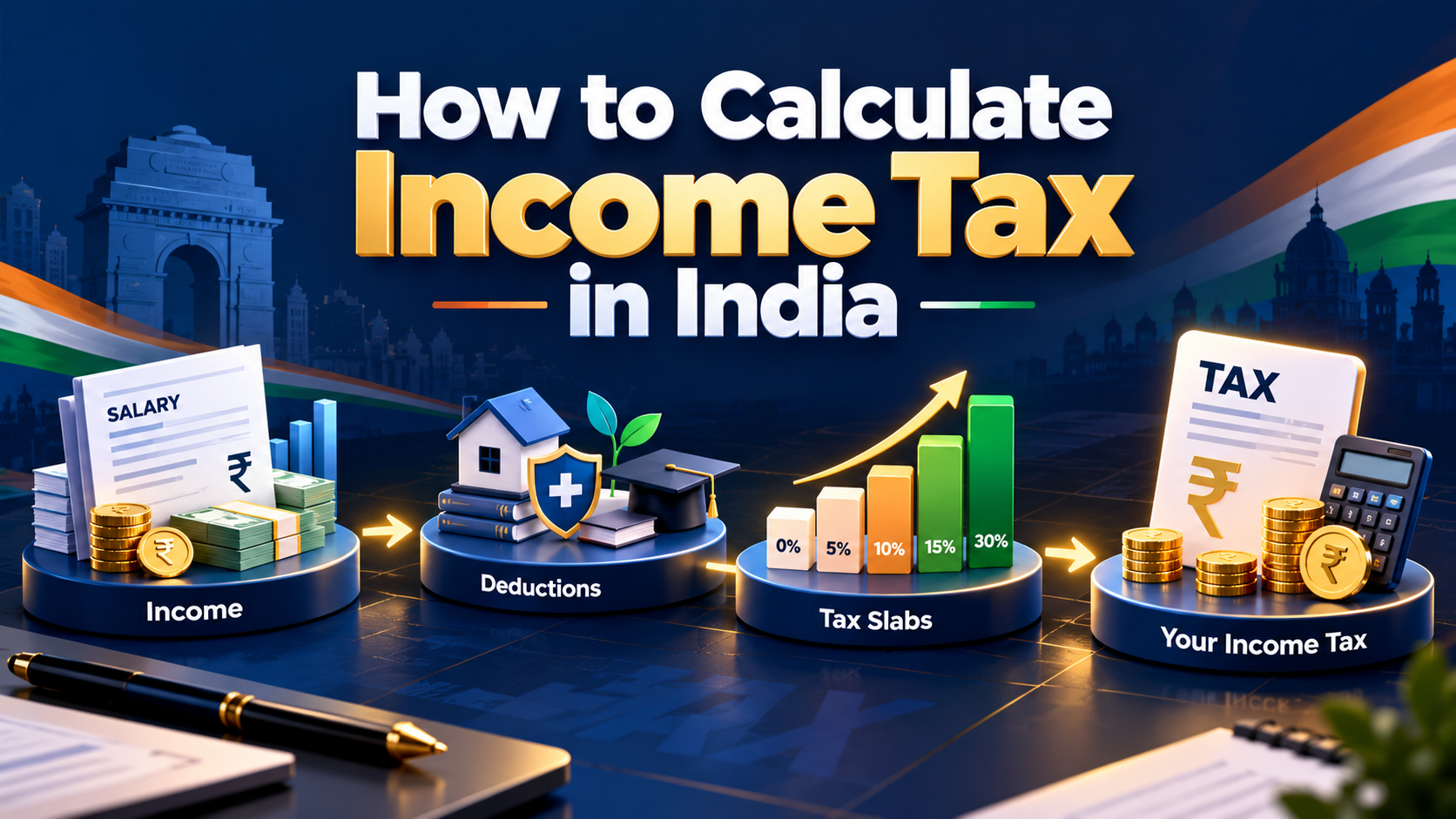
How to Calculate Income Tax in India
Income tax is an important part of financial planning for individuals earning taxable income.
Understanding how tax is calculated can help you estimate your tax liability, plan your finances, and compare applicable tax regimes.
The calculation depends on factors such as the financial year, residential status, type of income, deductions, exemptions, rebates, and applicable tax rules.
Step 1: Identify the Financial Year
First, identify the financial year for which you are calculating tax.
In India, the financial year generally runs from April 1 to March 31.
For example, FY 2026–27 runs from April 1, 2026, to March 31, 2027.
Tax rates and rules may change between financial years, so always use the rules applicable to the relevant year.
Step 2: Calculate Your Gross Income
Identify your income from relevant sources, which may include:
Salary.
Income from house property.
Business or professional income.
Capital gains.
Income from other sources, such as interest.
The tax treatment of each income source can differ.
Step 3: Determine Your Taxable Income
Taxable income is calculated after applying eligible deductions, exemptions, adjustments, and other provisions under the applicable tax regime.
For salary income, the calculation may include eligible salary-related deductions or exemptions, depending on the regime and applicable rules.
Some deductions available under one regime may not be available under another.
Therefore, calculate taxable income separately for each regime if you are comparing them.
Step 4: Apply the Applicable Tax Slabs
India has different income tax regimes for eligible individual taxpayers.
The old and new regimes have different slab structures and deduction rules. The applicable slabs depend on the financial year and the taxpayer's circumstances.
Under a slab-based system, different portions of taxable income may be taxed at different rates.
This means that moving into a higher tax slab does not generally mean that all your income is taxed at the highest applicable rate.
Step 5: Apply Eligible Rebates and Deductions
After calculating tax according to the applicable rules, determine whether you qualify for any eligible rebate or other tax relief.
Eligibility can depend on taxable income, the chosen regime, and other statutory conditions.
Do not assume that every taxpayer qualifies for the same benefits.
Step 6: Add Applicable Cess and Surcharge
Depending on your circumstances, surcharge may apply to certain income tax liabilities.
Health and Education Cess is generally calculated at 4% of income tax plus surcharge, where applicable.
The final calculation must follow the rules for the relevant financial year.
Step 7: Subtract Eligible Tax Credits
Tax already paid through mechanisms such as Tax Deducted at Source (TDS), advance tax, or eligible tax credits may reduce the remaining amount payable.
After considering eligible credits, you can estimate whether additional tax is due or whether you may be eligible for a refund.
A Simple Illustration
Suppose an individual's tax liability before eligible rebates and cess has been calculated as ₹50,000.
Assuming no surcharge applies and the full amount is subject to 4% Health and Education Cess:
Income tax: ₹50,000.
Cess at 4%: ₹2,000.
Total before tax credits: ₹52,000.
This is a mathematical illustration, not a complete tax calculation for a specific income level or financial year.
How Can an Income Tax Calculator Help?
An income tax calculator can help estimate tax liability using information such as:
Financial year.
Age, where relevant.
Income details.
Applicable deductions and exemptions.
Selected tax regime.
TDS and advance tax paid.
A useful calculator should clearly identify its assumptions and apply the rules relevant to the selected financial year.
Conclusion
Calculating income tax involves more than applying a single tax rate to your annual salary.
You must determine taxable income, apply the appropriate tax slabs, account for eligible rebates and deductions, calculate applicable cess and surcharge, and consider tax already paid.
Disclaimer: Tax rules can change. Verify the applicable provisions for your financial year or consult a qualified tax professional before filing your return.