How to Calculate Your Monthly EMI
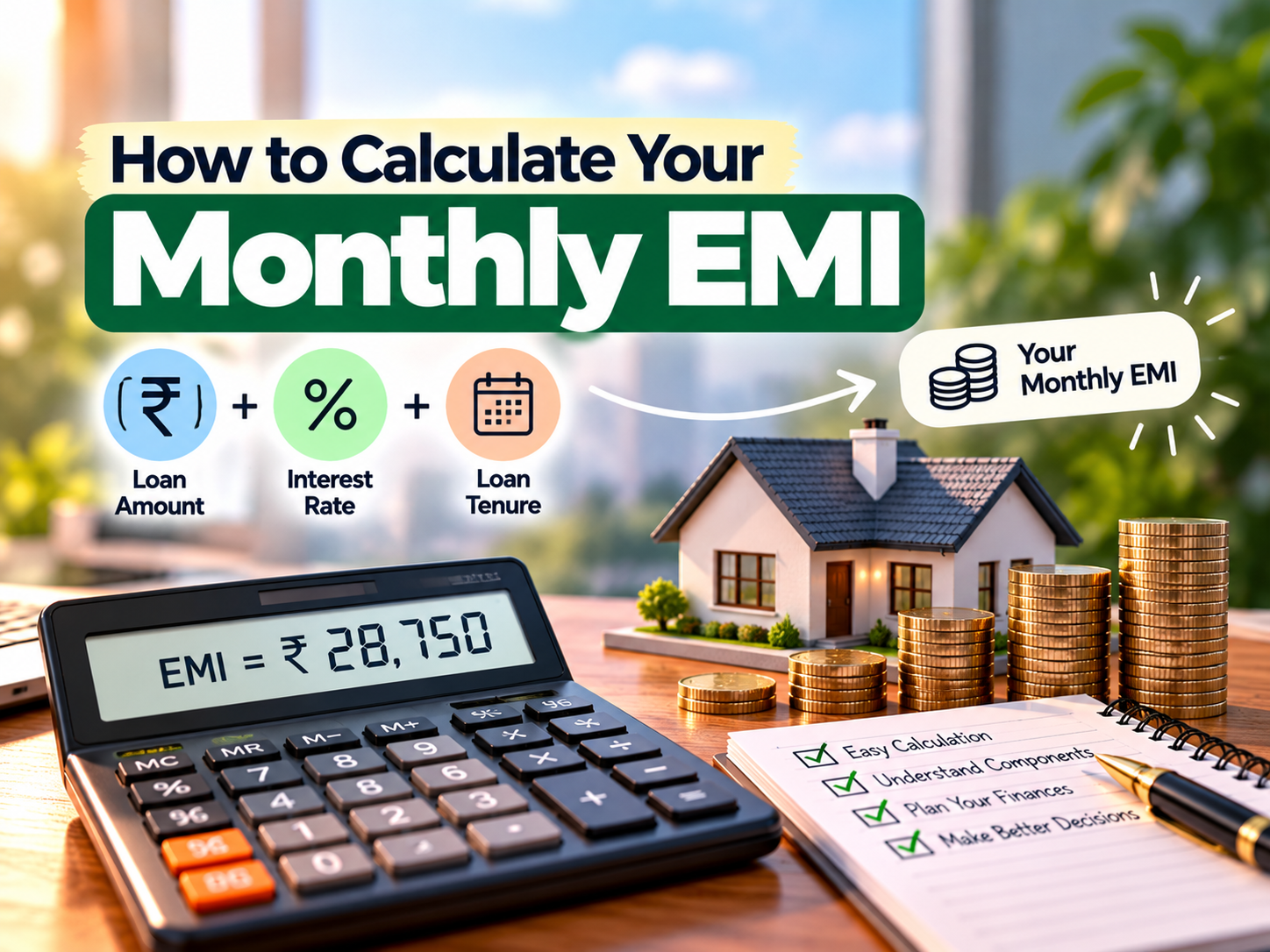
How to Calculate Your Monthly EMI
When you borrow money to purchase a home, vehicle, or other major asset, you generally repay the loan through scheduled installments.
For many loans, these installments are structured as Equated Monthly Installments, commonly known as EMIs.
An EMI usually consists of two components: principal repayment and interest.
Understanding how EMI calculations work can help you compare loan offers and plan your monthly budget.
What Is an EMI?
An Equated Monthly Installment is a fixed periodic payment used to repay a loan over an agreed period, assuming the loan uses a standard fixed-rate repayment structure.
Each EMI includes a portion of the outstanding principal and the interest charged for that period.
In a typical reducing-balance loan, the interest portion is higher during the early repayment period because the outstanding principal is larger. As the principal decreases, the interest component generally decreases and the principal component increases.
EMI Calculation Formula
The standard monthly EMI formula is:
EMI = P × r × (1 + r)^n / ((1 + r)^n − 1)
Where:
P = Principal loan amount.
r = Monthly interest rate expressed as a decimal.
n = Total number of monthly installments.
To calculate the monthly rate from an annual nominal interest rate:
Monthly interest rate = Annual interest rate / 12 / 100
For example, an annual interest rate of 9% corresponds to a monthly rate of 0.75%, or 0.0075, under this convention.
Example: Calculate EMI for a ₹5 Lakh Loan
Suppose you borrow ₹5,00,000 under these assumptions:
Parameter | Value |
|---|---|
Loan amount | ₹5,00,000 |
Annual interest rate | 10% |
Loan tenure | 5 years |
Number of monthly installments | 60 |
Monthly interest rate | 0.8333% approximately |
Using the standard EMI formula, the monthly EMI is approximately ₹10,624.
Over 60 monthly installments:
Total repayment: approximately ₹6,37,400.
Total interest: approximately ₹1,37,400.
Figures are rounded for illustration. The actual repayment schedule may differ because of lender-specific calculations, fees, insurance, payment dates, and rounding.
What Factors Affect Your EMI?
1. Loan Amount
A larger loan generally results in a higher EMI when the interest rate and tenure remain unchanged.
Borrow only what you can reasonably repay after accounting for essential expenses and other financial obligations.
2. Interest Rate
A higher interest rate generally increases your EMI and total interest cost for a given principal and tenure.
Comparing interest rates and associated charges across lenders can help you understand the overall borrowing cost.
3. Loan Tenure
A longer tenure generally reduces the monthly EMI but increases the total interest paid over the life of a standard amortizing loan.
A shorter tenure generally increases the monthly payment but can reduce the total interest cost.
The appropriate tenure depends on affordability and your broader financial goals.
How Can an EMI Calculator Help?
An EMI calculator can help you estimate repayments before applying for a loan.
You typically enter:
Loan amount.
Annual interest rate.
Loan tenure.
The calculator then estimates your monthly EMI, total repayment, and total interest.
You can adjust the values to compare different borrowing scenarios.
Tips Before Taking a Loan
Compare interest rates and processing fees.
Check whether the rate is fixed or floating.
Understand prepayment and foreclosure charges, if applicable.
Evaluate your existing debt obligations.
Leave sufficient room in your budget for emergencies.
Read the loan agreement before accepting the offer.
Conclusion
Understanding EMI calculations can help you assess loan affordability and compare borrowing options.
Before taking a loan, consider both the monthly installment and the total cost of borrowing over the full repayment period.
Disclaimer: EMI calculations are estimates. Actual loan terms, fees, and repayment schedules depend on the lender and the specific loan agreement.